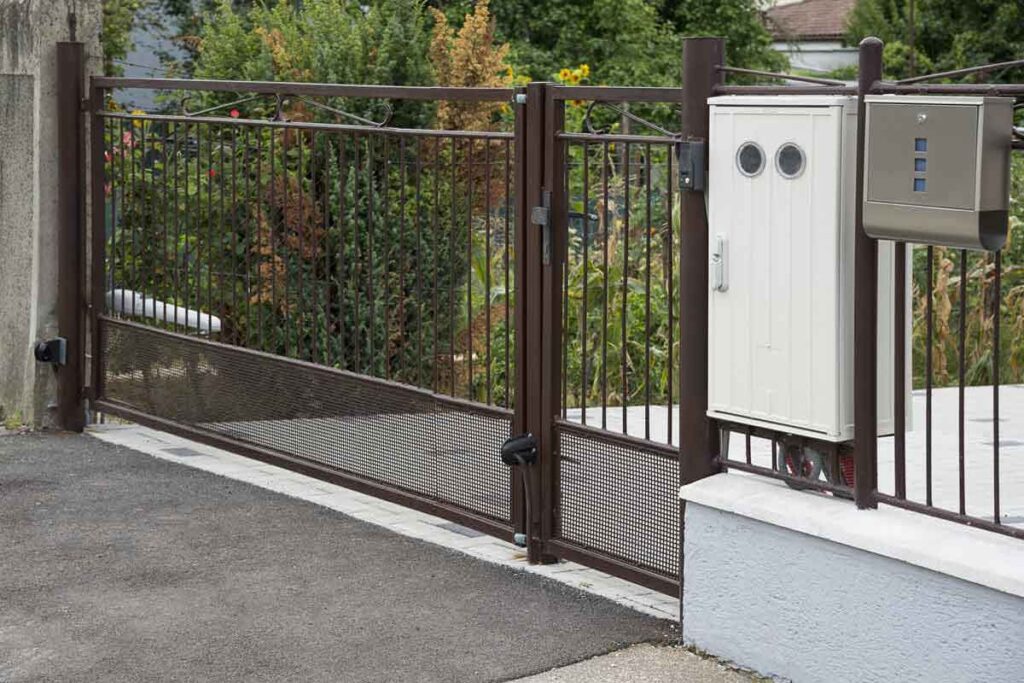
The mechanics behind gates often seem simple, but each gate type—slide, swing, or barrier—has distinct components and repair challenges. For any property owner investing in security systems, recognizing the nuances between these gates is critical. Whether residential or commercial, malfunctioning systems often demand expert attention. Iron Men Gates emphasizes the importance of choosing the right Automatic and Electric Gates Repair Service based on gate type, wear level, and usage.
Slide Gate Repairs: Common Issues and Considerations
Slide gates operate by moving laterally across a track or rail system. These gates are widely used in commercial settings with limited space because they require minimal clearance to operate. While practical and secure, slide gates present unique maintenance challenges.
Key Components Requiring Attention
- Motor unit: Responsible for driving the gate along the track. Motors often suffer from gear wear or overheating.
- Track and wheels: Debris buildup or rust can disrupt motion. Misalignment causes significant strain on the motor.
- Safety sensors: These prevent accidents but often malfunction due to dust, power surges, or misalignment.
Typical Repair Scenarios
- Track obstructions: A simple rock or debris can halt operation entirely.
- Rust and corrosion: Especially in areas prone to rain or sea salt exposure.
- Chain or belt tension: Loose or broken drive chains require retensioning or replacement.
- Motor failures: Often caused by power surges or internal component fatigue.
Repairs often begin with a full diagnostic on the motor, sensors, and alignment. Slide gates tend to suffer from mechanical issues rather than electrical faults, though both may occur.
Swing Gate Repairs: Specific Challenges and Repair Patterns
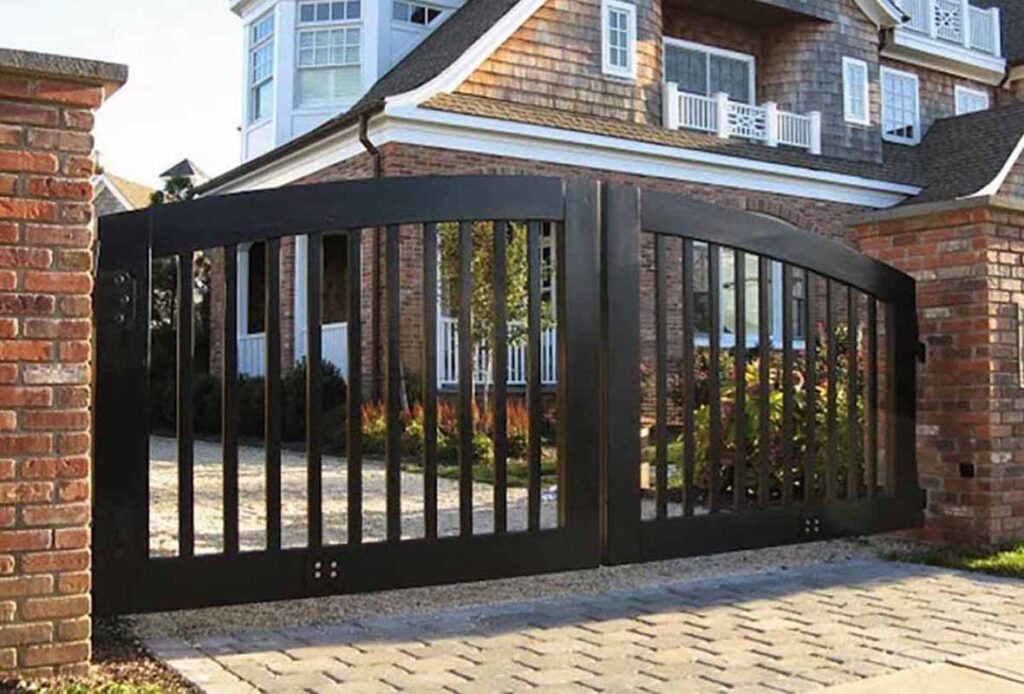
Swing gates function like doors, rotating on hinges to open inward or outward. They’re visually appealing and commonly installed at residential properties. However, their aesthetic often masks mechanical stress points.
Most Common Repair Requirements
- Hinge issues: Rust, sagging, or breakage due to weight and torque.
- Gate alignment: Soil shifts or poor installation can cause the gate to drag.
- Actuator malfunctions: These electric or hydraulic arms operate the gate and are prone to wear.
- Weather interference: Wind can damage the gate or overload the actuator.
Repairs Often Involve
- Realigning the gate to reduce torque pressure on hinges.
- Replacing actuators or motor control boards.
- Rewiring faulty connections that cause intermittent or failed operations.
- Welding or replacing hinges, especially in iron or steel models.
Unlike slide gates, swing gates are particularly sensitive to external elements like wind and moisture. Their parts also wear unevenly because of rotational motion, often leading to costly hinge damage if left unchecked.
Barrier Gate Repairs: Urban Efficiency, Technical Complexity
Barrier gates, or boom gates, are typically used in parking facilities, toll booths, and industrial complexes. They operate through a vertical lifting arm, making them space-efficient but technically demanding.
Key Repair Challenges
- Arm misalignment: Can damage both the arm and the actuator.
- Counterweight or spring failure: Causes the arm to remain open or closed.
- Control logic errors: Involves sensors, RFID readers, and PLCs, which are more sophisticated than typical gate systems.
- Arm damage: Often from vehicle impact or weather degradation.
Barrier Gate Repair Essentials
- Sensor recalibration to restore accurate motion response.
- Motor control board repairs or replacement, often triggered by voltage spikes.
- Boom arm replacement after impact or warping.
- Inspection of gear mechanisms to maintain smooth lift action.
Barrier gates require a hybrid skillset in electrical troubleshooting and mechanical repair. Technicians often need to interact with parking software, vehicle detectors, or automation systems while ensuring physical integrity.
Comparing Slide, Swing, and Barrier Gates Repair Needs
To illustrate how repair demands differ, consider this structured comparison:
| Feature | Slide Gate | Swing Gate | Barrier Gate |
|---|---|---|---|
| Space Requirements | Lateral space | Inward/outward clearance | Minimal footprint |
| Common Failures | Track obstructions, motor | Hinge sag, actuator faults | Arm misalignment, sensor errors |
| Repair Focus | Mechanics and alignment | Hinges, rotation control | Logic control, actuator function |
| Typical Installation Use | Commercial, industrial | Residential | Parking lots, toll gates |
| Sensor Dependencies | Moderate | Moderate | High |
Signs That Immediate Repair Is Needed
Delays in repair can result in larger structural or electrical damage. Here are the warning signs specific to each gate type:
Slide Gate
- Uneven or jerky movement
- Loud grinding noises from the motor
- Unresponsive to remote signals
Swing Gate
- Gate dragging on the ground
- Sudden resistance when opening
- Clicking sounds in the actuator
Barrier Gate
- The arm is not fully rising or lowering
- Random motion or delay in response
- The parking system is not recognizing vehicle presence
Maintenance to Reduce Repair Frequency
Preventive care plays a crucial role in extending the life of any gate system. While the repairs vary by type, consistent maintenance routines remain effective across the board.
Preventive Measures for All Gate Types
- Monthly lubrication of mechanical parts.
- Cleaning sensors to avoid false triggers.
- Checking wiring insulation to prevent shorts.
- Seasonal inspections before winter or monsoon months.
- Tightening loose bolts and fasteners to avoid mechanical stress buildup.
Industry Trends Affecting Gate Repair Strategies
As automation becomes more integrated into access systems, gate repair services must account for IoT-enabled controls, AI-driven diagnostics, and smart connectivity. This shift is more visible in barrier gates but is increasingly present in slide and swing models as well.
Impact Areas
- Software-linked errors: Especially in barrier gates with payment integration.
- Remote diagnostics: Reduces downtime but requires compatible firmware.
- Battery backups and solar-powered units: More maintenance-sensitive than traditional wired systems.
These evolving technologies make expert intervention essential, especially when repairs impact access control, security, and operational continuity.
Cost Considerations Based on Gate Type
Repair costs fluctuate based on parts, labor intensity, and accessibility. While exact figures vary by project and damage level, patterns remain consistent.
Cost Hierarchy (from lowest to highest average):
- Swing Gate Repairs – Usually simpler, unless actuator replacement is required.
- Slide Gate Repairs – Moderate, especially when motors or tracks are involved.
- Barrier Gate Repairs – Often higher due to electronic controls and boom arm systems.
It’s also important to consider emergency service costs for after-hours repair, which is particularly common in commercial settings.
Why Choosing the Right Technician Matters?
Each gate system comes with unique requirements, and a technician well-versed in one type may not necessarily be the right choice for another. Proper diagnostics, part compatibility, and installation knowledge are critical.
Technicians should have:
- Familiarity with the brand-specific control boards
- Access to authentic replacement parts
- Strong mechanical-electrical integration skills
- Awareness of safety compliance regulations (UL 325, ASTM standards, etc.)
Missteps during repair can lead to repeat failures, voided warranties, or even injury.
Safety Implications of Delayed Repairs
Gates serve a critical role in controlling access, deterring unauthorized entry, and protecting assets. A malfunctioning gate, regardless of type, creates a vulnerability.
Key Safety Risks
- Injury to pedestrians or pets during erratic operation
- Property damage from uncontrolled closures or swings
- Security breaches due to non-functional access control
Barrier gates in public-facing environments pose additional risks when payment systems or traffic flow is interrupted, leading to customer dissatisfaction and operational disruptions.
When to Repair vs. Replace
At a certain point, ongoing repairs become less economical than replacing the gate system altogether. The decision to repair or replace often hinges on:
- Frequency of breakdowns
- Availability of replacement parts
- Extent of structural damage
- Compatibility with new automation systems
For instance, if a slide gate motor requires replacement twice within 12 months, it’s often more cost-effective to upgrade the system entirely.
Why Choose Iron Men Gates?
Iron Men Gates brings reliability, precision, and detail-driven repair strategies tailored to each gate type. From slide and swing systems to complex barrier units, our technicians provide end-to-end solutions. Whether the challenge is mechanical alignment, electronic control, or structural reinforcement, we ensure long-lasting performance.
We prioritize:
- Safety-centric service approaches
- On-site diagnostics tailored to the gate type
- Minimal downtime through rapid-response teams
- Transparent service quotes with no surprise charges
Iron Men Gates is committed to delivering dependable results for both residential and commercial clients. With tailored repair strategies based on gate type, we protect your investment while enhancing operational reliability.